|
The John W. Jones Museum
In 1998 the house at 1259 College Avenue in Elmira in which John W. Jones had
lived had been condemned by the City of Elmira and was threatened with demolition.
A group of concerned people resolved that they would not let the historic house
be torn down and would restore it as a museum to commemorate the activity of
the Underground Railroad in the Southern Tier of New York State, including the
abolitionists who helped the runaways and particularly the life, good work,
and kind manner of John W. Jones, and also the history of African-Americans
who settled in the Southern Tier because of the UGRR.
The house has been moved to a city park about one half block away on Davis
Street, still on the farm that Mr. Jones had owned and still close to Woodlawn
Cemetery where he had been in charge of burying 2973 Confederate soldiers who
had died in the Elmira Prison Camp.
The house was made from recycled, pre-used, lumber. Some of it may have come
from the buildings of the Prison Camp. The exterior of the front of the house
has been restored along with the front porch and its roof. The porch columns
are inside the house ready to be replaced along with latticework.
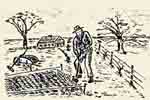
The Master Gardeners from Cornell Cooperative Extension have planted some historic
fruit trees and will be planting an historic kitchen garden next to the house,
and someday a medicinal garden as well. Since Mr. Jones was listed in the city
directory as a market gardener, these historic gardens will be appropriate.
Restoration continues as money is available from donations and grants. The
opening of the museum to the public is at least a couple of years away. More
information about the John W. Jones Museum project may be obtained by contacting
Barbara Ramsdell at wramsdel@stny.rr.com or by writing to: John W. Jones Museum,
P. O. Box 932, Elmira, NY 14902.
All photographs were supplied by Joan N. O'Dell.
|